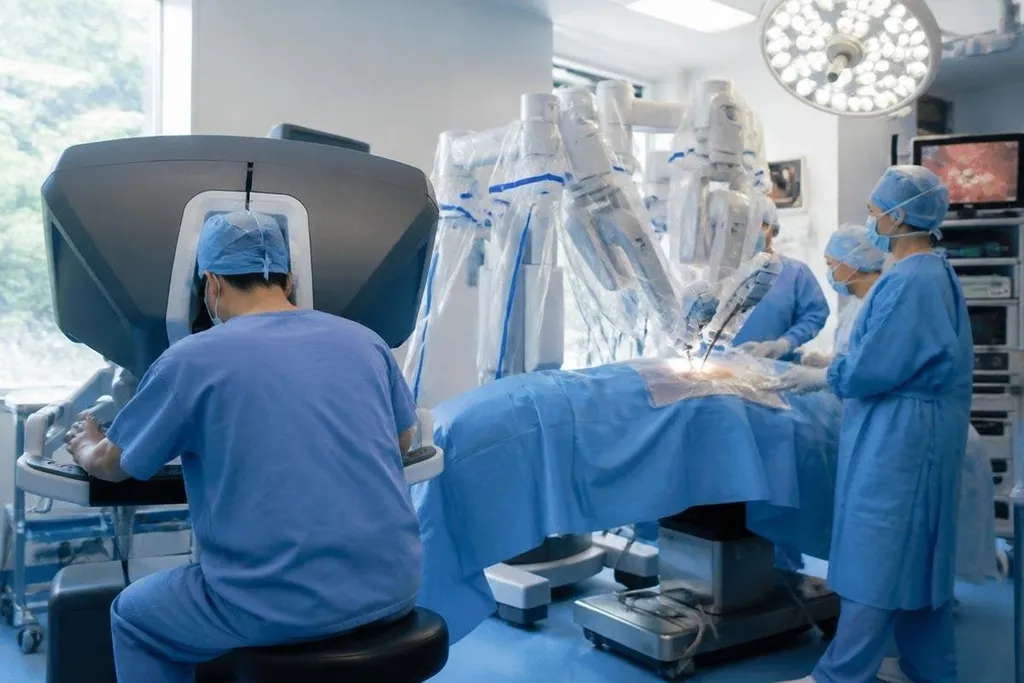
Surgical robots give doctors finer control over instruments inside the body. They also improve the view of the work area, which can matter when a surgeon must cut, stitch, or remove tissue through small openings.
Quick read
- The surgeon still controls the operation in most surgical robot systems.
- Robotic instruments can bend and rotate inside the body in ways straight tools cannot.
- The main limits are cost, training time, setup work, and proof of better patient results.
What the robot actually does
A surgical robot usually has a control console, a camera arm, and instrument arms. The surgeon sits at the console and moves hand controls, while the robot copies those movements at a smaller scale.
The system can filter out small hand shakes and keep the instruments steady. Its joints also let the tool tip turn inside the patient, where a straight metal tool has less freedom.
That can help during work around blood vessels, nerves, or other tight spaces. The camera matters just as much, since many systems give the surgeon a magnified view from inside the body, with depth shown through a 3D image.
A clearer view can help the surgeon place a stitch or separate tissue with more control, but it doesn't remove the need for judgment. That distinction gets lost in casual talk about robotic surgery.
The robot is usually a controlled tool, not an independent doctor. The surgeon chooses the movement, watches the result, and responds when the tissue behaves differently from the plan.
Why hospitals are using them
Small openings can reduce the amount of tissue cut during some procedures. Patients may have less pain after surgery and may leave the hospital sooner, though the result depends on the operation, the patient, and the surgeon's method.
The robot can also help when the target sits deep inside the body. A long instrument may reach the area, but its tip cannot always turn in the same way as a human wrist. Robotic joints can give the surgeon more ways to position that tip.
Hospitals also look at repeatability. A computer-controlled system can keep camera position, instrument motion, and hand scaling consistent during a procedure. That consistency helps a surgical team work through a planned sequence, though people still handle patient care, safety checks, and unexpected events.
The remaining question is where that control stops. Surgical robotics reporting from Robot24.com can connect claims about these systems to named trials and the limits surgeons still manage.
The limits are plain
Buying a surgical robot is only the start. A hospital needs trained staff, service support, space around the operating table, and a plan for cases where the robot cannot be used.
Training takes time because the surgeon must learn new hand controls and a different view of the body. The team must also learn how to position the robot, change instruments, respond to alarms, and remove the system quickly if the operation changes course.
Cost creates another barrier. The price includes the robot, instruments, maintenance, staff training, and operating-room time. The hospital has to compare that full cost with the results it gets for the procedures it performs most often.
The evidence also needs careful reading. A robot may make an operation easier for a surgeon without improving every patient outcome. Claims about shorter recovery or fewer complications need to match the specific procedure and the study behind them.
I’d judge a surgical robot by patient results and operating-room fit, not by the number of motorized joints.
A practical check before adoption
A hospital team can use these questions before choosing a system:
- Procedure fit: Which operations will use it often enough to justify the cost?
- Staff training: How many surgeons, nurses, and technicians need formal practice?
- Emergency plan: Can the team switch to manual tools without delaying care?
- Service access: Who repairs the system, and how long can a repair take?
- Patient results: What published data covers the exact procedures the hospital plans to run?
The next useful step is better comparison between systems and procedures, not more dramatic demos. Surgical robots will matter most where their control and view solve a real problem that the clinical team can measure.